
Living With a Cat With Cerebellar Hypoplasia: Jovie’s Story
Cerebellar hypoplasia (CH) is a neurological condition that affects a cat’s balance and coordination, often causing the wobbly movements many people associate with CH cats. While it can look alarming at first, most of these cats go on to live happy, playful lives with just a few thoughtful adjustments in their environment.
Jovie is one of those cats, and her story is a reminder that sometimes the biggest challenge isn’t the condition itself, but learning to see the world through a different lens.
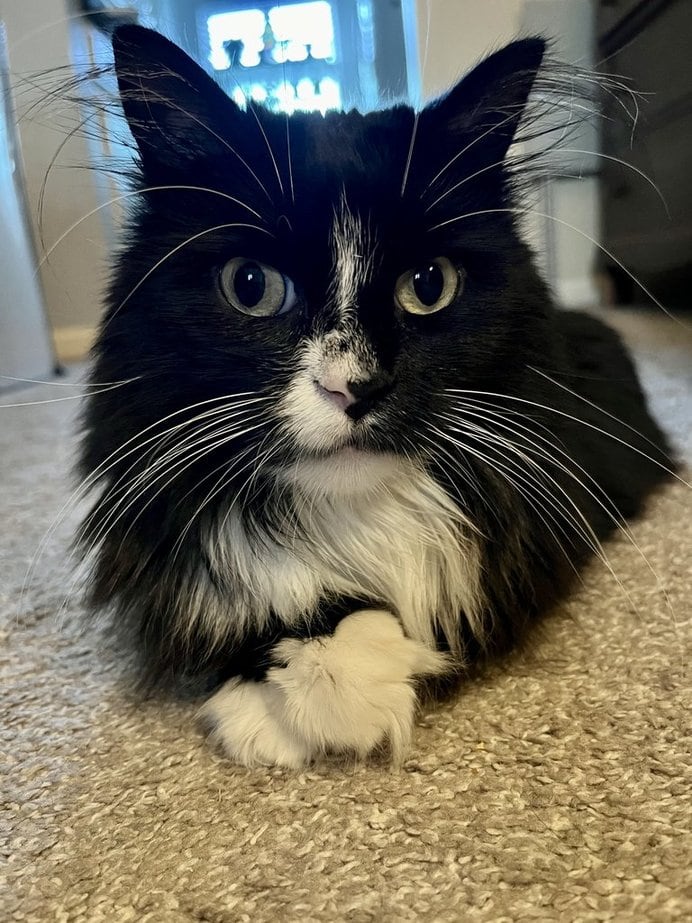
Meeting Jovie
Cassandra was already an experienced cat foster and rescue volunteer, but when she first met Jovie, she still wasn’t sure she was the right person to care for her.
Jovie was only four months old at that time, a tiny homeless kitten taken into the rescue where Cassandra was a volunteer. Jovie was most likely born with cerebellar hypoplasia and limited vision, a lot to deal with for a kitten so young. She was easily overwhelmed by the world around her, and like many cats with sensory challenges, she sometimes reacted strongly to unfamiliar sounds or sudden movements.
Cassandra decided to take on the challenge of fostering her, hoping she could offer Jovie a temporary safe place until a forever family came along to adopt her.
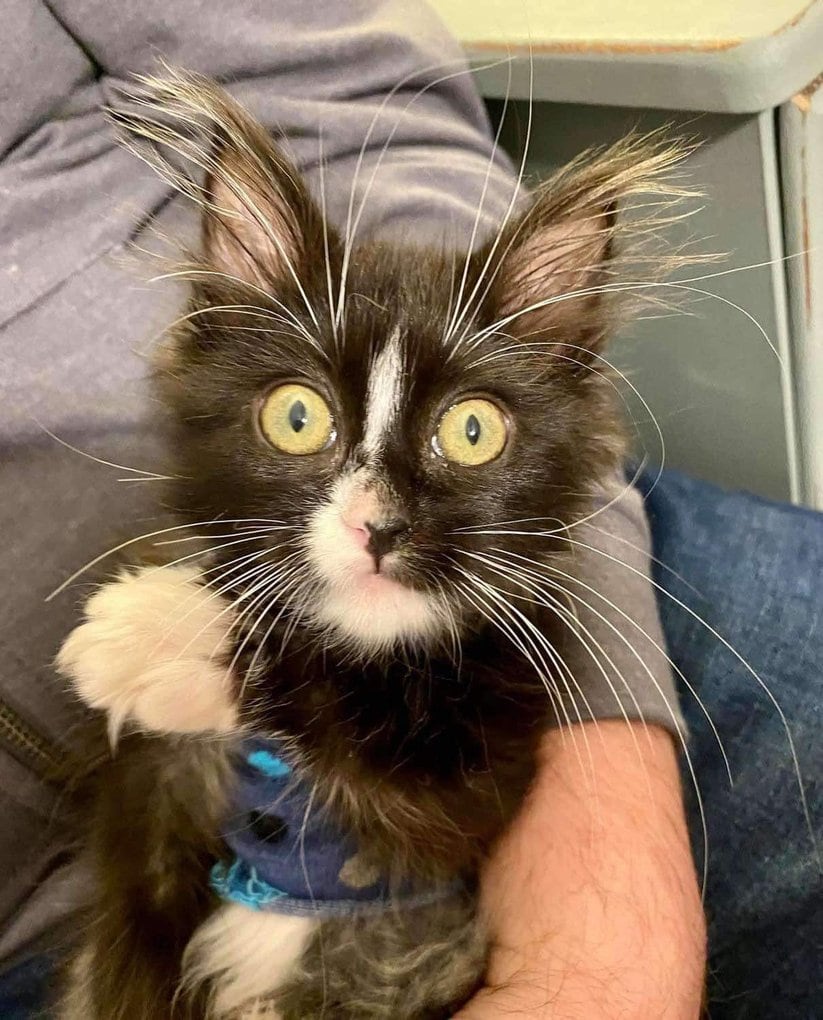
Learning Jovie’s World
When Cassandra first got home with Jovie, she set up a separate closed area for her with the things she needed, like food, water, litter box and toys. But a bigger challenge that she faced was that Jovie was seemingly scared of just about everything. When she heard noises she often hissed, growled or walked in circles. She could go from a relaxed state to a reactive state in the blink of an eye.
Cassandra was already amazing with cats and had infinite patience, but it took even more patience and creativity to make Jovie comfortable. Cassandra worked for several months adjusting to Jovie’s needs, and by the time Jovie was eight months old, Cassandra decided to make Jovie an official part of her family by adopting her.
Modifications for a CH cat in the home
Cerebellar hypoplasia can vary from mild to significant, so the adjustments needed will depend on the individual cat. Common adjustments include adding rugs or runners for traction on slippery floors, using low-entry or larger litter boxes, elevating food and water bowls so they can brace while eating, and creating spaces where they can move safely without obstacles.
For Jovie, these changes came together over time as Cassandra learned what worked best for her. Rugs were placed throughout the house to help with traction, her food and water were positioned so she could stabilize herself, and quiet spaces were created where she could retreat when she felt overwhelmed. Cassandra also found that consistency and using her voice helped Jovie feel more oriented. None of these changes were complicated, but together they made it easier for Jovie to move confidently and settle into her environment.
Challenges of Adopting a Cat with CH
Common challenges for cats with cerebellar hypoplasia often come down to balance, coordination, and how they process their environment. This can show up as difficulty navigating spaces, being more easily startled by noise or movement, or becoming overwhelmed when routines change. When vision is also limited, it can add another layer, since sounds and unexpected movement can feel more intense or unpredictable.
For Jovie, one of the biggest challenges has been how she reacts to certain noises, like the dishwasher, laundry, or even the other cats in the house. These sounds can startle her and sometimes cause her to get upset, especially since she can’t always rely on her vision to understand what’s happening around her.
Over time, Cassandra has learned to build routines around these moments, doing things in a more predictable way rather than always on her own schedule. One of the harder lessons has been learning to let Jovie experience new or loud things, even when they do upset her at first. Like a young child, Jovie has shown that she can work through it and figure things out on her own, even without constant intervention.
Daily Life with a Cat with Cerebellar Hypoplasia
One of the biggest misconceptions about cats with cerebellar hypoplasia is that they aren’t able to live full, normal lives. While they may move through the world differently, many still enjoy the same things as any other cat, like finding a sunny spot to nap, playing with toys, seeking out attention, and building strong bonds with their people.
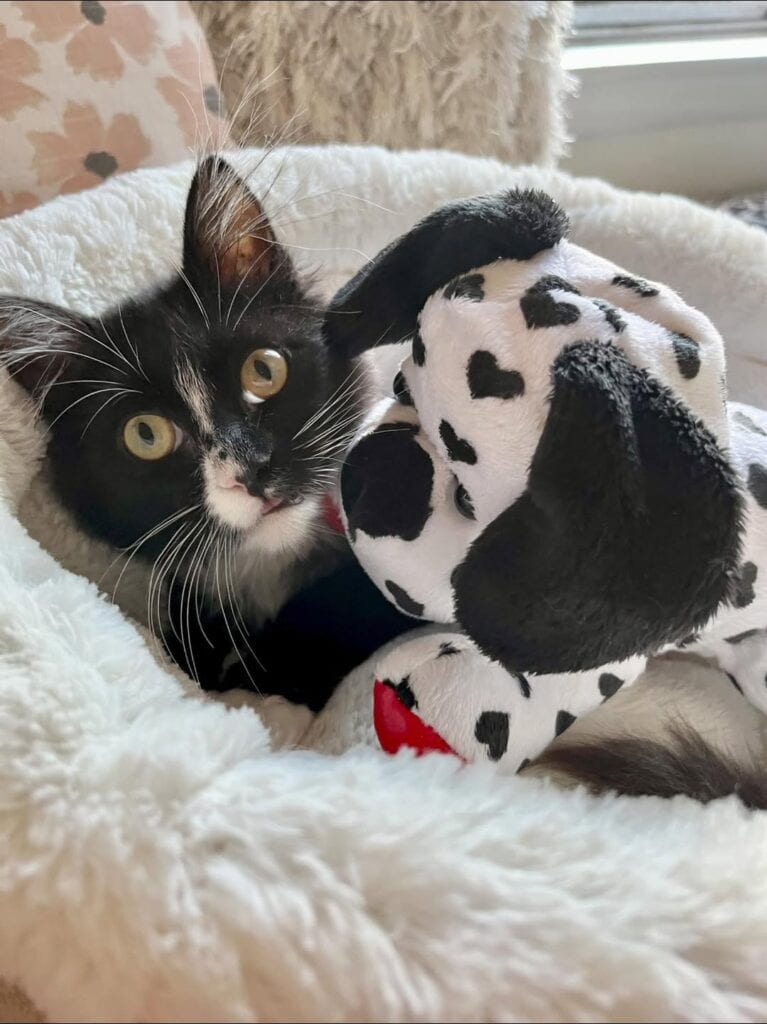
Jovie is a great example of this. She’s often walking around with a happy tail, sitting by the sunny patio door she loves, or playing and cuddling with her stuffies that bring her comfort. She’s chatty when Cassandra comes home from work or gets up in the morning, and she happily allows herself to be picked up, purring loudly and making biscuits on her shoulders.
When Cassandra first met Jovie, she wasn’t sure what life would look like for her or if she would be able to do many of the things typical cats do. But Jovie continues to prove that assumption wrong. She chirps for treats when Cassandra goes into the kitchen or sits down on the floor with her, and she confidently moves through the house as part of the daily rhythm of the home.
Seeing her comfortable, engaged, and doing so many normal cat things has been one of the most meaningful parts of the experience for Cassandra.
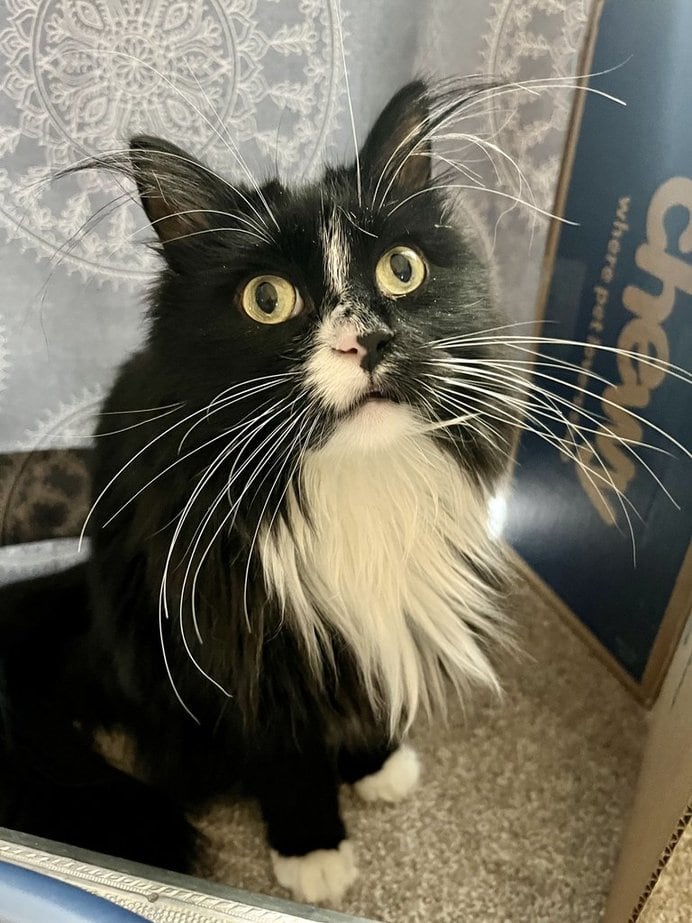
What It’s Like Living With a Special Needs Cat
While Jovie’s life looks full and joyful, it hasn’t come without learning, adjustment, and a willingness to see things differently. Cassandra shared this about her experience:
“She does require extra thought and attention – but it doesn’t take away from my daily routine. She adds something special to my life and is able to exist with my other cats in a way that I would have never thought possible. She has changed my perspective on limitations as she doesn’t live as though she has any. It makes me realize I can do more even when I think I can’t. Jovie brings joy & inspiration to me daily.”
For those considering a cat with similar needs, Cassandra offers this advice:
“Make sure you have the patience and time to learn how to support your special cat. Don’t be afraid to ask others who have cats with similar conditions for tips on what works for them. Know that it will be extra work – in one way or another. It took a lot of time for me to be comfortable & she needs the same. The biggest thing I learned was that I was more anxious about failing her than I needed to be. She really just needed my voice reassuring her, my patience and willingness to let her bloom.”
Stories like Jovie’s are a reminder that what we assume about special needs cats isn’t always the full picture. With a little patience, the right support, and a willingness to learn, these cats can live full, meaningful lives. Sometimes they just need someone willing to see what’s possible.


